
It’s been weeks since the Stranger Things series finale aired, and yet the rumors of a secret episode—the so-called “Conformity Gate”—continue to swirl. This is despite the original “prophetic” date (January 7th) coming and going with no new release, the cast insisting the show is done, and Netflix updating their bios to read: “ALL EPISODES OF STRANGER THINGS ARE NOW PLAYING.”
Yet, a dedicated corner of the fandom refuses to let go. With January 7th behind us, the goalposts have shifted to July because, as we know, 7 was an important number, therefore indicating it must be coming in the 7th month of the year. It is also worth noting that the first season dropped on July 15th, 2016. If there was a secret episode, releasing it on that date would make it exactly 10 years after the whole show started. Oh, and some theories even report that the announcement is coming during the Super Bowl.
So what exactly is Conformity Gate, where did this all start, and why is it almost certainly a myth?
What is the “Conformity Gate?”
Conformity Gate is the conspiracy theory that there is a 9th episode of Stranger Things which has not yet been released and will drop at some point later on. The general background behind the theory is that all of the characters and audience were put under Vecna’s curse, which led them to believe that he had been defeated, when in fact he was not. The show then ends in a tidy, happy way. Proponents of the theory claim that the ending was far too positive, which must point to the fact that it was all an illusion.
Where did “Conformity Gate” Come From?
It is difficult to identify a single source that started the wild conspiracy theory, rather there is just a large number of posts to Facebook, TikTok, Reddit, and other social media platforms where the claims spread like wildfire. These posts also drew enormous amounts of engagement, which meant the social media algorithms pushed them out even more.
Those pushing the claims point to a number of so-called secret messages that they believe they discovered in the show and several continuity errors. The theory initially listed these without the name. Sometime thereafter, the name was given by fans who felt that the ending was conformist fantasy and that the characters all just conformed to what society wanted. It is even mentioned by some that the characters weren’t “true to themselves” since “Byler” never became canon, with Mike and Eleven continuing as the primary relationship.
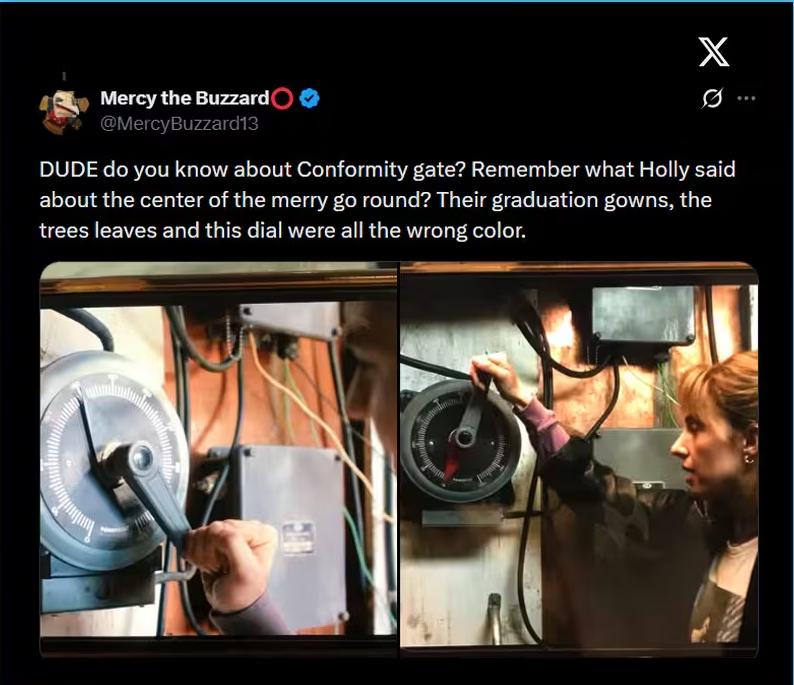
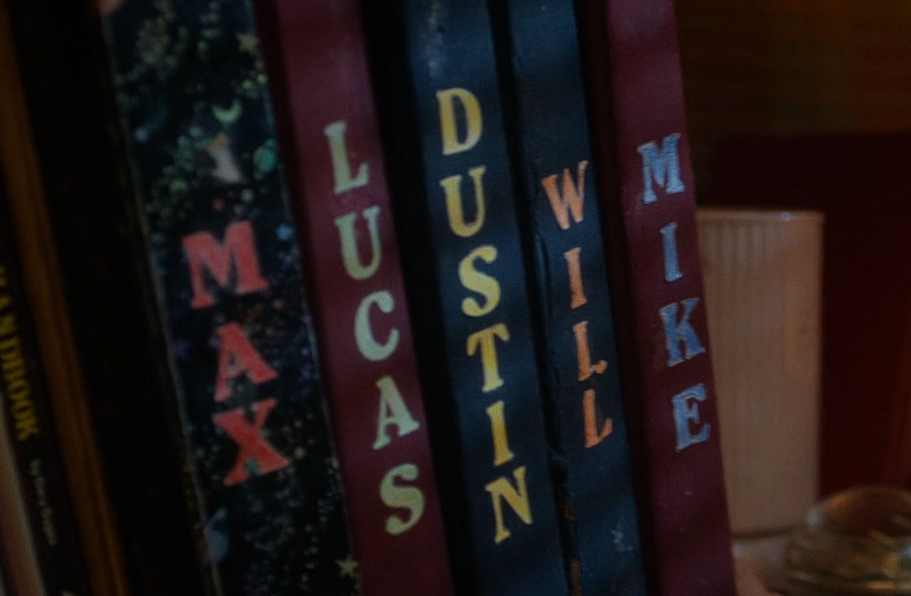
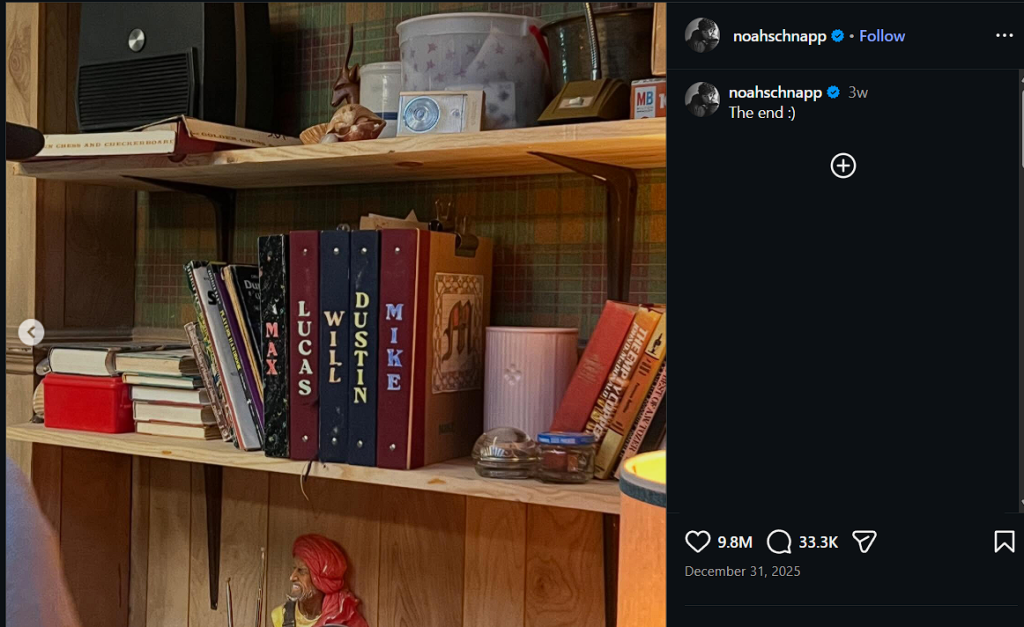
The evidence that has been laid out is extensive; it’s a deep rabbit hole that you can dive into. Some of the key items that fans pointed out include the dial inside of the WSQK transmitter power room changing colors between two scenes, the color of the graduation gowns, the posture of the people at the graduation ceremony, hints from the WSQK real-world radio station, and the party’s DnD books spelling out “XALIE” (referring to the abyss being a lie). We will get to debunking at least a few of these later on.
This theory also likely comes from fans who are truly passionate for the series and are just not ready for the end of it. After all, the show is a cultural behemoth that dominated the streaming world every time a new season dropped, with a 10 year long run. That’s a substantial amount of time for a show, even with the gaps between seasons. It also came from some fans who were not completely satisfied with the ending. It turns out that there’s a pretty vocal group of fans who wanted a lot of the characters to die but instead found the finale underwhelming, anti-climatic, and too basic for a show of the caliber that Stranger Things is. Interestingly, this is also not the first television show to experience the phenomenon of a massive conspiracy theory. Both Sherlock and Lost experienced a similar phenomenon after their endings.
Why it’s Unlikely to be True
While a lot of fans would love just one more episode, there are many, many holes to this theory and the “evidence” that supports it. First, let’s a take a look at the claim that the ending was too positive, happy, and tidy, which of course indicates that there must be something afoot. Turns out, though, that the Duffer brothers mention in the documentary, One Last Adventure, that they wanted the show to end happily. They didn’t want to kill off a bunch of the characters. Now there’s also probably some self-serving reasons behind this. Not killing off much of the main cast makes it far easier should the series ever decide to reboot in the future. There are no issues of which characters can and can’t be brought back, nor any worry of continuity errors.
Next, let’s look at the continuity errors in season 5. These exist in every show and have been present throughout other seasons. Sometimes they are thrown in intentionally, as “easter eggs” for the audience to find. Other times they are just truly accidental parts of the production. If we look back through the seasons, there are other occasions when this has happened. For example, in season 2, Billy’s Camaro sometimes has manual windows and other times has power windows. In season 4, Nancy is in Hawkins Lab with Vecna chasing her, but wood planks are keeping her from opening the door until she can pull them off. However, as we soon see, the door opens inwards, which means the planks wouldn’t have kept the door closed. Similar occurrences in season 5, such as the WSQK dial changing from gray to red, are likely just production and prop errors.
It is pretty easy to debunk the graduation gown piece. Some say that the gowns are orange, which is similar to the color of a prisoner’s clothing, indicating the townsfolk are prisoners of Vecna. However, orange is actually one of the school’s secondary colors as seen on signs and sports uniforms. As for the main character’s DND binders spelling out “XALIE?” Turns out that this was actually photo from after filming wrapped, taken by Noah Schnapp. It didn’t appear in the show itself. In the actual season finale, the books are aligned to spell out “XATLK.” Nothing nefarious here to see.
Furthermore, it’s just really hard to keep a secret like this. Production of Stranger Things was no small task. In fact, over a thousand people were working on the show between cast, production, other support staff. In particular, the main cast have at times struggled with spoilers by accidentally giving tidbits of information away in interviews (and yes, we are looking at you Noah Schnapp!). However, they have not indicated anything about another episode while on a massive publicity tour to support season 5. Nothing about an unresolved character arc or something happening that we didn’t see in the final season.
Finally, there is also the business side of things. Stranger Things is a MASSIVE franchise for Netflix. The series finale played in movie theaters across the country at the same time it released for home streaming. The Duffers wanted to give people an opportunity to experience the end together, and they did. It would be a horribly bad look to go back on that with a surprise episode. Plus, while a week or so might make sense, a longer gap serves Netflix little to no benefit if they aren’t able to hype up the series and keep subscriptions from it.
What Conformity Gate Really Says About Stranger Things
Taken individually, many of the clues cited by Conformity Gate supporters can feel suggestive. A color change here, a prop inconsistency there, a line of dialogue that seems to point somewhere else. But taken together and weighed against creator intent, production realities, and basic business logic, the theory quickly falls apart. What looks like a hidden pattern is far more plausibly the result of a massive production, human error, and an audience that spent the entire series looking for hidden clues or deeper meaning in every scene.
In the end, Conformity Gate says less about a secret ninth episode and more about the impact Stranger Things had on its audience. It was a show that invited obsession, analysis, and emotional investment. For some fans, believing there is more still to come is easier than accepting that the story has truly ended. When something like that ends, letting go is never simple. If nothing else, the persistence of this theory is a testament to how deeply the series embedded itself in popular culture, and how hard it is to say goodbye, even when the final credits have already rolled.

The VIP perks here are actually worth it. I feel like a valued player and the bonuses are generous. Get your account ready at plus777vipregister
The login is seamless and the page loads fast even on my mobile data. It is very convenient for quick bets on the go. Love using winphcomlogin.
Honestly one of the smoothest apps I have tried lately. Fast payouts and the interface is very friendly for beginners. Definitely check out phtg7776 if you want a fair game.
Fast deposits and even faster withdrawals. That is all I really care about and they nailed it. Big thanks to bdnag777 for the great service.
Simple, clean, and very effective. I prefer a site that doesn’t overcomplicate things. idtania77 provides exactly that.
Glad I found the updated link. The games are exciting and the bonuses are actually fair. Keep it up x777newlink!
The VIP treatment here is legit. I feel like a valued player and the rewards are genuinely generous. Great job jilibayvip!
Top tier service and very fair odds. I’ve recommended this site to a few friends and we all have had a blast playing together. Visit jilifunregisteronline for a premium experience.